



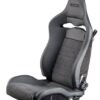
Race Seat: Types, Features and Buying Guide for Car Enthusiasts in the USA
Race seat is an important component of a performance vehicle, providing specialised seating support for drivers involved in motorsports, track driving, and automotive modifications. Whether you are building a track car, upgrading a Ford Mustang, modifying a Chevrolet Camaro, or researching aftermarket racing seats, choosing the right seat involves considering comfort, fitment, materials, and safety.
In the United States, race seats are available in different designs, from reclining sport seats to fixed-back competition bucket seats. Understanding their differences can help you identify the right option for your vehicle and intended driving conditions.
What Is a Race Seat?
A race seat is an automotive seat designed to provide occupant support during performance driving and motorsport activities. Unlike many standard factory seats, competition racing seats typically feature deeper side bolsters, reinforced shells, and specialised mounting arrangements.
Some models also include harness openings for compatible four-, five-, or six-point racing harnesses. However, not every aftermarket racing seat is approved for every motorsport event or suitable for public-road use.
Different Types of Racing Seats
1. Fixed-Back Racing Seats
Fixed-back racing seats feature a non-adjustable backrest and a rigid shell. They are commonly used in competition vehicles where consistent seating position and lateral support are important.
2. Reclining Racing Seats
Reclining race seats allow drivers to adjust the backrest angle. They may be more practical for street-oriented performance cars because they offer greater seating flexibility.
3. Carbon Fiber Race Seats
Carbon fiber racing seats use carbon-fibre-reinforced composite shells. They are popular in performance builds because of their lightweight construction and distinctive motorsport appearance.
4. Fiberglass Racing Seats
Fiberglass composite seats are another common option in motorsport. Depending on their construction and engineering, they can provide a competition-oriented seating solution at different price points.
5. Full-Containment Racing Seats
Full-containment seats feature additional side and head support for specific motorsport applications. They are designed to work as part of a properly engineered safety system.
Popular Race Seat Brands
Automotive enthusiasts researching aftermarket racing seats often compare established manufacturers such as:
- Sparco racing seats
- RECARO racing seats
- Bride racing seats
- OMP racing seats
- Corbeau racing seats
Each manufacturer offers different designs, materials, sizes, and intended applications. Always compare individual models rather than assuming all seats from one brand have the same certification.
How to Choose the Right Race Seat in the USA
Before purchasing a race seat in the USA, consider these important factors:
Seat dimensions: Measure your hip and shoulder width and compare them with the manufacturer’s sizing chart. Proper fit is essential for comfort and support.
Vehicle compatibility: Check the vehicle’s make, model, year, mounting points, seat rails, and available cabin space.
Material: Compare fiberglass, carbon-fibre composites, and other shell constructions.
Harness compatibility: Verify that the seat is designed for the specific restraint system required by your motorsport application.
FIA homologation: If you participate in organised racing, check the exact homologation number, manufacturing date, validity, and event regulations.
Road-use requirements: A competition seat is not automatically suitable for public roads. Consider airbags, seat-belt pretensioners, occupancy sensors, and other original safety systems before modifying factory seating.
Where to Research Aftermarket Race Seats
For automotive seating information and aftermarket seat research, visit Bucket Seats Auto. The website is a relevant reference for exploring bucket seats, racing-inspired interiors, and automotive seating options.
Before purchasing from any supplier, independently review business information, product availability, fitment specifications, warranty conditions, and return policies.
Frequently Asked Questions
1. What is the difference between a race seat and a bucket seat?
A bucket seat describes an individual seat with a shaped design. A race seat is intended for performance or competition applications and may include specialised support and harness provisions.
2. Are racing seats comfortable for daily driving?
Some reclining sport seats can be suitable for everyday driving. Fixed-back competition seats may be less convenient for daily use.
3. Are FIA-approved racing seats better?
FIA homologation indicates that a particular seat meets the requirements of a specified motorsport standard. The correct standard depends on the racing series and regulations.
4. Can I install a race seat in a Mustang?
Some aftermarket racing seats can be fitted to Mustang models using compatible mounting hardware. Check the model year, seat dimensions, brackets, and safety-system compatibility.
5. Are carbon fiber race seats worth considering?
Carbon-fibre seats may appeal to enthusiasts seeking lightweight composite construction and motorsport styling. Compare the complete seat system, certification, and price before choosing.
Final Thoughts
A race seat can be an important upgrade for a performance vehicle or dedicated motorsport build. Compare materials, dimensions, installation requirements, comfort, and safety certification before making a decision. The right seat should suit the driver, vehicle, and intended application.
| SIDE | LEFT, RIGHT |
|---|
Be the first to review “SPR”
Related products

Seats for a Car
Silver Rocket Air-Cooled Porous Seat Insert for 981 / 982 / 991 / 992 Porsche with LWB Seat


Seats for a Car
Seats for a Car

Seats for a Car

Seats for a Car
RECARO Sport Series Art Special Edition AM190 Sportster Seat [81-111.20.639-1/81-111.20.639-2]

Seats for a Car
RECARO Racing Series Flexible Adapter For P1300 GT [7308864NA]

Reviews
There are no reviews yet.